

















Structural Levels Explore the fundamental components of the educational model
01 Fundamentals
Institutional
Institutional Philosophical Framework
• ESPE Mission, Vision and Values
• Institutional Domain: Security, Defense and Society
• Smart University Paradigm
• Internationalization
• Regulatory Framework (External and Internal Regulations)
Theory
Epistemological Theoretical Framework
• Principles of Learning and Teaching: Epistemology, Axiology, Anthropology, Complexity Theory, Neuroeducation.
• Pedagogical approaches: Behaviorism, Cognitivism, Constructivism, Connectivism, Humanism.
02 Roles
student
Student Role
Active and autonomous
• Protagonist of their learning
• Knowledge builder
• Responsible and self-managed
• Critical, reflective and researcher.
• Creative, Innovative, Entrepreneurial
Teacher
Role of the Teacher
Mediator and facilitator
• Learning Experience Designer
• Guide and guide of the process
• Foster dialogue and collaboration
• Evaluator of the training process
03 Design
CURRICULAR ORGANIZATION
What?
• Academic Domains and Fields of Knowledge
• Training levels and modalities
• Itineraries and Academic Route
• Curriculum design based on learning outcomes, oriented to the achievement of competencies
INSTRUCTIONAL DESIGN
How?
• Specific teaching-learning strategies and activities
• Definition of Learning Outcomes
• Evaluation of Learning Outcomes
• Didactic specification (Syllabus, Portfolios)
UNIVERSAL LEARNING DESIGN (DUL)
Why?
• Adaptation of activities for the diversity of specific students
• Inclusion and Accessibility for All
• Multiple forms of Representation, Motivation and Commitment
04 Cross-cutting components
ARTICULATION: TEACHING, RESEARCH AND LIAISON WITH SOCIETY
Articulation: Teaching, Research and Linkage with Society
• Formative Research (Research and Scientific Initiation Projects)
• Links with society (pre-professional internships, social projects)
• Knowledge Dialogue (Exchange of knowledge with society)
INTERNATIONALIZATION
Institutional Philosophical Framework
• Student/Faculty Mobility
• Proficiency in other languages
• Global Collaboration and Networking
ARTIFICIAL INTELLIGENCE (AI)
Epistemological Theoretical Framework
• Personalization of learning
• Data analytics
• Process automation
• Use of AI with ethical criteria
05 Implementation
Instructional Design Models
Instructional Design Models
• ADDIE, Neko, SAM
• Dick & Carey, 4C/ID
• Kemp, ARCS
• Other...
Pedagogical Strategies (Tpack Framework)
Pedagogical Strategies (Tpack Framework)
• Project-Based Learning (PBL)
• Problem-Based Learning (PBL)
• Flipped classroom, gamification
• Collaborative Learning
• Other...
The ESPE Educational Model is recognized as an eclectic model
06 Quality
Accompaniment and Environment
Accompaniment and Environment
• Academic and Personalized Tutorials (Accompaniment)
• Comprehensive University Welfare (Support)
• Physical and Virtual Learning Environments (Support Structures)
• Graduate Tracking, Job Bank (Feedback)
Quality Assessment and Management
Quality Assessment and Management
• Comprehensive evaluation of the student and academic staff
• Institutional Quality Management
• Continuous Improvement Actions
Institutional Foundations The essential conceptual and normative basis for the construction and implementation of the educational model. It is articulated through institutional philosophy, the legal framework and theoretical foundations.
Institutional Philosophy
It defines the identity, mission, vision and values of the University. It guides the purpose and ethical principles that guide all educational and training actions.
Mission
To train professionals and researchers of excellence, creative, humanistic, with leadership capacity, critical thinking and high citizen awareness; to generate and apply scientific knowledge; and to transfer technology, within the scope of its academic domains, to contribute to national development and meet the needs of society and the Armed Forces. (Art. 2 of the University Statute)
Vision
To be recognized as a national and regional benchmark for its contribution in the field of its academic domains, to the strengthening of Security and Defense, under a framework of ethical, civic and community service values (Art. 2 Statute of the University).
Institutional Principles
- The human being as a person is where he recognizes himself as a unique and unrepeatable person, autonomous, creator of his culture and knowledge who seeks knowledge, justice, happiness, one capable of transforming his environment and transcending by his actions.
- The human being as a subject of learning, where the person is aware that education is a process that contributes favorably to his integral formation, being a critical, reflective and thinking being.
- The human being as a citizen of the world, where he participates in the collective commitment to build and preserve a democratic, just and equitable society.
Institutional Values
Smart University
Digital, academic and organizational transformation.
Smart Educational Model
Smart Campus and Security
Data-Driven Management
Internationalization
Transversal axis for global projection.
Academic Mobility
Global Knowledge Networks
Second Language Learning
Legal Basis
A set of regulations (Constitution, Higher Education Law, Statute, internal and external regulations) that regulate university work, ensuring its relevance and legality.
The model is protected by the Constitution of the Republic, the Organic Law of Higher Education (LOES), the Statute of the ESPE and other internal and external regulations. This framework ensures the quality, relevance, responsible autonomy and fulfillment of the purposes of the higher education system.
Theoretical Foundations
Epistemological, anthropological, pedagogical, axiological, sociological and neuroeducational conceptual bases that explain how learning is understood in ESPE. They support curricular and methodological decisions.
Neuroeducation
Relevant axis of the ESPE Educational Model that aligns teaching with brain functioning: emotion, brain plasticity (the brain's ability to modify itself with experience) and active learning. This approach emphasizes the inseparable connection between emotion and cognition. It prioritizes the creation of a climate of psychological safety, fosters intrinsic motivation and connects the curriculum with the student's interests and professional future
Epistemology and Anthropology
It conceives knowledge as an active and social construction. It focuses on a contemporary humanism that forms free, critical, and ethical human beings.
Complexity Theory
Based on Edgar Morin. Recognize uncertainty and interconnectedness. It promotes systemic, hologrammatic, and recursive thinking to face real problems.
Eclectic Approach
ESPE is not restricted to a single stream. It integrates the best of several paradigms (epistemology, axiology, anthropology, neuroeducation, complexity theory, pedagogical approaches and classroom practices) which are defined according to academic domains, fields of knowledge, level of training, modality of studies
Roles in Curriculum Design The essential conceptual and normative basis for the construction and implementation of the educational model. It is articulated through institutional philosophy, the legal framework and theoretical foundations.
The Student
Active Protagonist
He is not a passive receiver, but a reflective and committed subject. It is the fundamental axis of the training process, capable of self-managing their learning and critically interpreting the complexity of the world.
- Author of his thought
- Actor of his reality
- Transformer of the environment
- Admission Profile
Previous skills and aptitudes needed:
- Willingness to work in a team and openness to new ideas.
- Creative, critical thinking and the capacity for abstraction.
- Communicational, mathematical and digital skills.
- Civic and environmental values.
- Professional Profile
Vision of the ideal graduate: an integral, critical and ethical subject. Able to make informed decisions and act responsibly in different environments (Security, Defence, Society).
- Graduate Profile
Achievements at the end of the training:
- Generic and specific skills for the world of work.
- Ability to innovate and solve complex problems.
- Lifelong learning and proactive attitude.
- Promotion of entrepreneurship and strategic leadership.
- Second Language
An essential requirement for mobility and employability. Levels A2/B1 according to the CEFR.
The Teacher
Mediator and Facilitator
More than a transmitter of knowledge, he is a reflective and ethical professional. It designs, guides and evaluates training processes, promoting dialogue, innovation and interdisciplinarity.
- Learning Guide
- Innovation Promoter
- Social Change Agent
- Teaching Competencies
- Plan content and learning outcomes.
- Use active and andragogical strategies.
- Create collaborative environments.
- Evaluate with valid instruments.
- Research
- Promote a culture of scientific inquiry.
- Formulate problems and apply rigorous methods.
- Lead interdisciplinary projects.
- Epistemological curiosity.
- Social Bonding
- Inter-institutional work.
- Social impact and innovation projects.
- Empathy and community responsibility.
- Promotion of active citizenship.
- Continuous Professional Development
Institutional imperative: Constant updating in discipline, pedagogy, technology and leadership.
Design and Planning A consistent structure that articulates the curricular organization, instructional design and universal design to ensure deep and meaningful learning.
Scientific Basis: Neuroeducation
The ESPE educational model is not an isolated sum of components; it is an integrated system validated by Neuroscience. For learning to be effective, the brain needs to simultaneously activate three primary neural networks. Our model responds directly to this biological need by articulating three key dimensions:
Curricular Organization
Academic Domains
Axes that group the academic offer and research.
- Applied Sciences
- Human, Social, and Administrative Sciences
- Security and Defense
Study Modalities
Flexibility to respond to diverse contexts and profiles.
Training Levels
Progressive and articulated academic trajectories.
Third Level
Technical, Technological and Degree
Fourth Level
Postgraduate (Master's and Doctorate)
Instructional Design
It is the operative bridge between theory and practice. Select methods and resources to create effective learning experiences. ESPE takes a flexible approach using various models as needed.
Some models of Instructional Design that Careers and Programs can adopt are:
SEQUENTIAL
ADDIE
Analysis, Design, Development, Implementation, Evaluation. Ideal for structured processes.
agile
SAM
Model of Successive Approximations. Iterative, fast, and prototype-centric.
Complex
4C/ID
For learning complex skills through authentic and progressive tasks.
Holistic
Kemp
Non-linear and flexible approach, focused on multiple factors and student needs.
Universal Design (DUA)
UDL is the framework that removes barriers to learning. By connecting with the Affective Networks of the brain, it responds to the “Why” of learning, ensuring motivation and engagement.
Representation
WHAT? LEARNING
Provide multiple means of representation (visual, auditory, interactive) to adapt to perception.
Action and Expression
THE HOW? LEARNING
Provide diverse ways for students to navigate and demonstrate what they know beyond the traditional.
Commitment
WHY? LEARNING
Use varied strategies to recruit interest and sustain effort, connecting directly with emotion.
Cross-sectional components The university as a living ecosystem where Teaching, Research and Linkage are synergistically integrated, driven by Internationalization and Artificial Intelligence.
Integration of Substantive Functions
They are not separate islands. It is a functional triad that guarantees relevant, scientifically and socially responsible training.
Research
KNOWLEDGE GENERATION
It nurtures teaching with new knowledge and provides technological solutions to society.
Teaching
CENTRAL TRAINING AXIS
It integrates research results and bonding experiences to train well-rounded professionals.
Outreach
SOCIAL RELEVANCE
Detects real problems in the environment that feed back into the lines of research and teaching practice.
R+D+i model
A dynamic ecosystem focused on the generation, management and transfer of knowledge.
Generation of Knowledge:
Formative Research: Seedbed of researchers from undergraduate, articulated to the curriculum. Academic Research: Research Projects with the participation of teachers and students
Knowledge Management:
Academic Groups and Networks, Valuation of scientific knowledge, Valorization and protection of knowledge
Knowledge and Technology Transfer:
Registration and Cataloguing of the scientific and technological offer of the ESPE. Promotion and dissemination. Intellectual property management. Integration of Academia, Industry, State, Society and Armed Forces in an environmentally friendly environment.
Links with society
The means by which the university delivers concrete solutions, promoting university social responsibility.
Pre-professional internships
A fundamental element in the training of future professionals, it seeks to familiarize the student with real work environments and face problems of their profession, with the accompaniment of an academic tutor and a business tutor.
Continuing Education
Permanent professional updating for society.
Social Projects
A fundamental element in the training of future professionals, it seeks to familiarize the student with real work environments and face problems of their profession, with the accompaniment of an academic tutor and a business tutor.
Social and Open Innovation
A fundamental element in the training of future professionals, it seeks to familiarize the student with real work environments and face problems of their profession, with the accompaniment of an academic tutor and a business tutor.
Model catalysts
Internationalization
It's not just mobility. It is a transversal axis that integrates global curricula, language learning (including ancestral languages), research networks and global citizenship.
Artificial Intelligence
Under the Smart University paradigm, AI personalizes learning, supports decision-making with data and enhances the TPACK framework, always under ethical criteria.
Didactic Implementation The moment of truth in the classroom: where curriculum planning is transformed into learning experiences through instructional design, the TPACK framework, and active strategies.
Microcurricular Planning
The operational specification of the curriculum. Ensures that objectives, content, and evaluations are coherently articulated in the classroom.
Analytical Program
Structural reference document that defines the general guidelines for the implementation of each subject. Defines general guidelines, minimum contents, and learning outcomes.
Structural Benchmark
Syllabus
Operational instrument and pedagogical guide. It details the "day to day": schedule, specific strategies and evaluation for an academic period.
Operational Guide
Portfolios
Evidence of the training process. The Teacher records his planning and resources; the Student documents his/her achievements and reflections.
Structural Benchmark
TPACK Framework
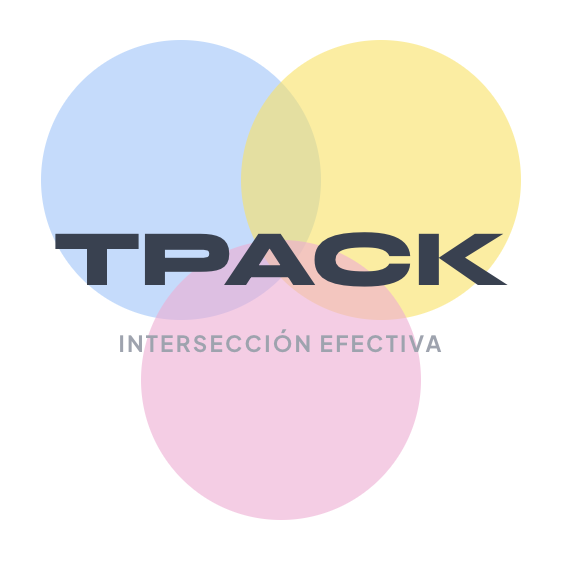
Technology is not used for the sake of use in the classroom. The TPACK model (Pedagogical Technological Content Knowledge) is a fundamental component of our educational strategy. He proposes that effective teaching arises from the intersection of three forms of knowledge:
Content (CK)
Deep mastery of the discipline.
Pedagogy (PK)
How to teach and manage learning.
Technology (TK)
Digital tools to enhance the process.
Pedagogical Strategies (Eclectic Approach)
PBL (Projects)
Integration of knowledge around contextualized challenges and real products.
PBL (Problems)
It encourages autonomy and critical thinking to solve complex situations.
Flipped Classroom
Reconfigure time: theory at home, practice and application in the classroom.
Gamification
Use of game mechanics to increase motivation and engagement.
Other Strategies
According to the specific characteristics and needs of each career or program.
Comprehensive Evaluation
An ongoing and thoughtful process, not just to grade, but to learn. It is aligned with the learning outcomes and the graduation profile.
Diagnosis
At the beginning. Identify prior knowledge to adjust planning.
Formative
Continue. It accompanies the process, provides feedback and allows improvement.
Summative
At the closing. Certifies the achievements achieved and validates competencies.
Quality and Support Excellence is not an act, it is a habit sustained by an ecosystem of well-being, adequate learning environments and a permanent cycle of evaluation.
Accompaniment and Student Environment
Institutional strategies that guarantee permanence, comprehensive well-being, and academic success.
Academic Tutorials
Preventive and guiding accompaniment, not only remedial. Strengthens autonomy.
Integral Wellness
Psychological care, social work, scholarships and health for a complete human formation.
Learning Environments
Physical and virtual ecosystems, laboratories and simulation centers.
Alumni ESPE
Follow-up of graduates and job bank to provide feedback on curricular relevance.
Professional Career
Value Chain: From the Classroom to Success
How knowledge is articulated with professional development.
Foundation
FORMATIVE RESEARCH
Identification of real problems and development of solutions with scientific rigor.
Development
Identification of real problems and development of solutions with scientific rigor.
Employability route
(Internships)
Innovation Route
(Entrepreneurship)
Results
REAL IMPACT
Identification of real problems and development of solutions with scientific rigor.
Quality Management
Continuous Improvement
Application of the PDCA cycle (Plan, Do, Verify, Act) to ensure the relevance and updating of the educational model.
Accreditation
Compliance with national (CACES) and international standards, ensuring excellence in teaching, research and linkage.